

Pendant Buying Guide
Pendant Light Materials Compared: Glass, Metal, and Natural Fibers
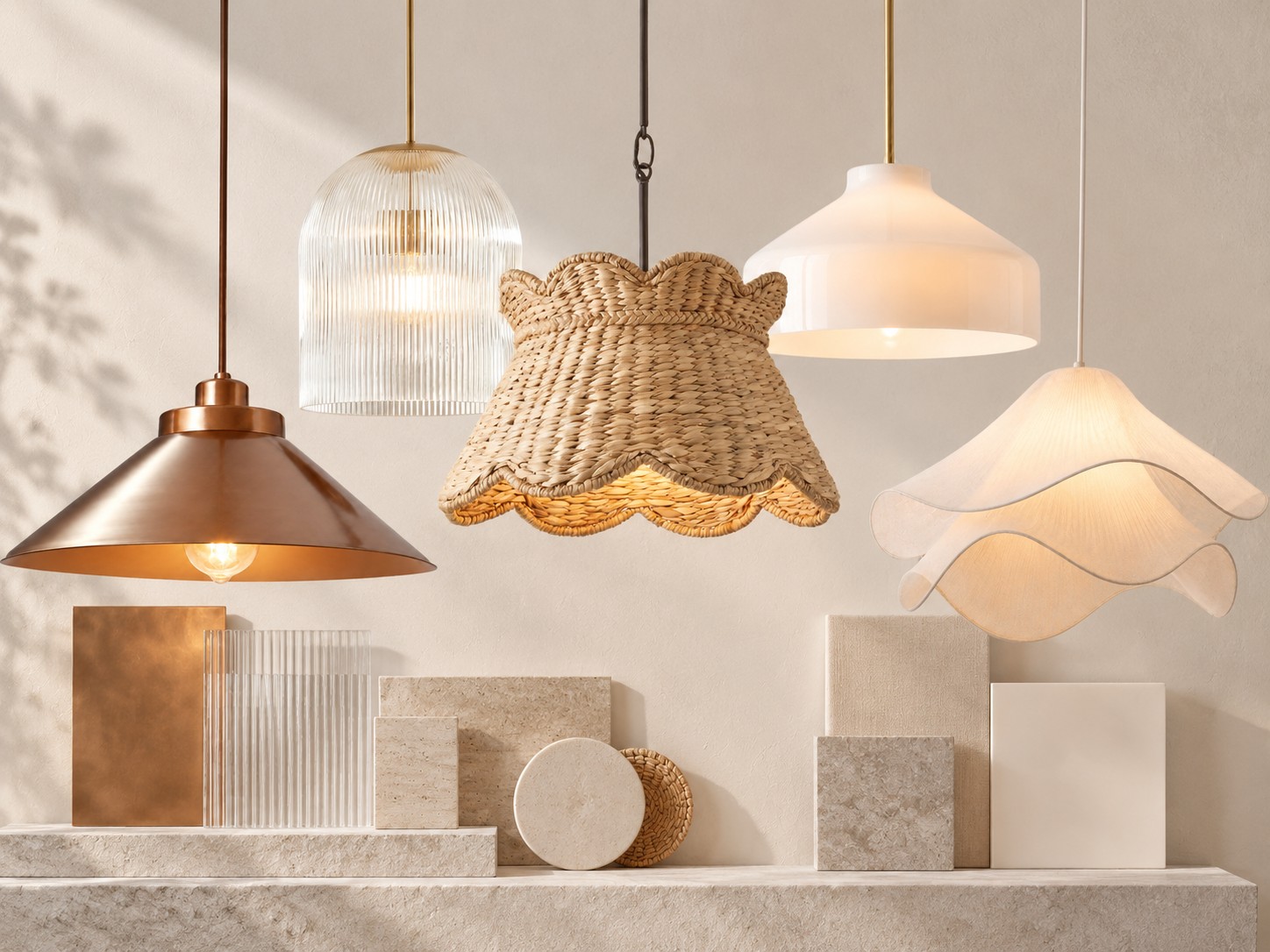
A pendant shade does more than establish a style. Its material changes how much of the bulb you see, where the light goes, and how the fixture looks when it is switched off.
When comparing pendant light materials, consider the shape and opacity of the shade alongside the material name. Clear, frosted, and ribbed glass behave differently; a solid metal dome does not light a room the same way as an open metal frame.
Glass Pendants: Airy or Diffused
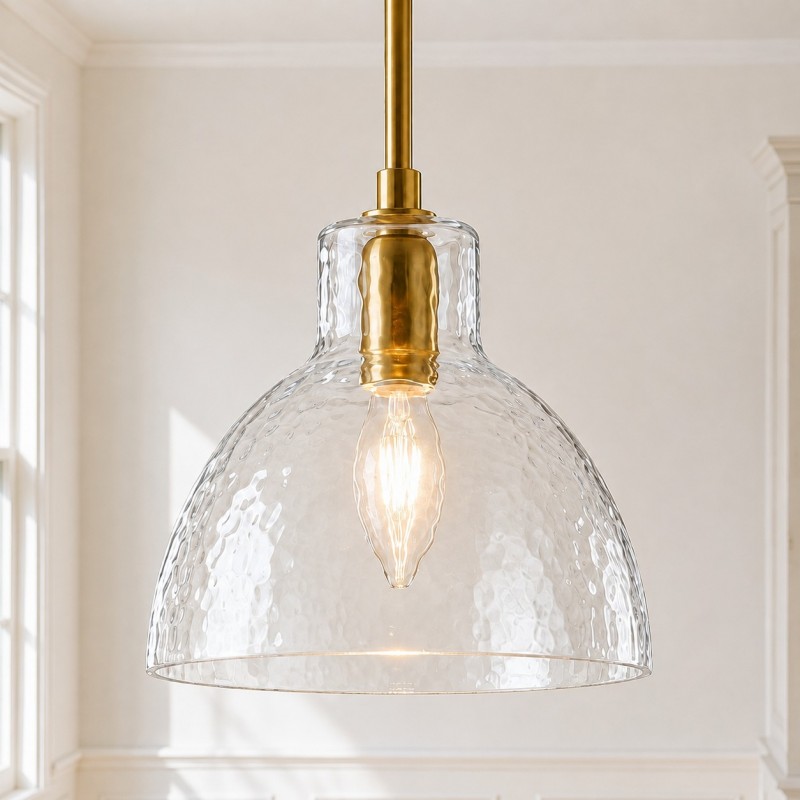
Clear glass can keep a sightline open and put the bulb on display, which also makes bulb appearance important. Frosted or milk glass can soften the visible light source. Ribbed glass adds surface texture and can partially obscure the bulb, though the effect varies by thickness and finish.
Glass shows dust and fingerprints, and the shade should be handled according to the manufacturer’s cleaning directions. Compare glass options in the pendant lights collection for shade shape and bulb visibility.
Metal Pendants: Defined Direction
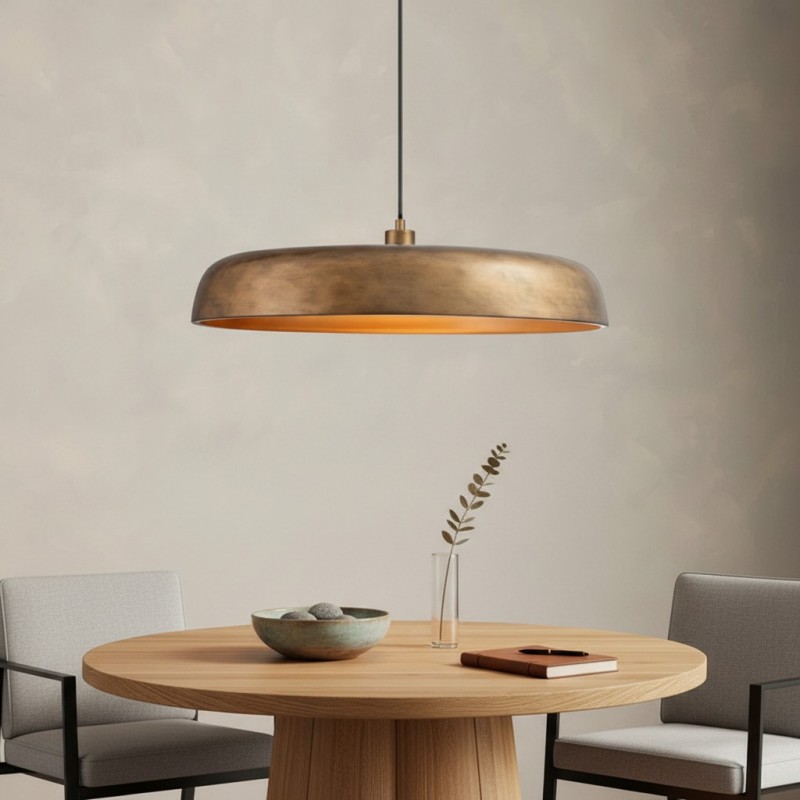
A solid metal shade typically blocks light through its sides and sends more of it through its opening. This can work well above a table or counter, while the surrounding room may need another layer of illumination. Lighter interiors or reflective finishes can change how bright the shade feels from below.
Check the shade opening and bulb position: an exposed bulb near the bottom may cause glare from seated viewpoints. Compare metal options in the pendant lights collection and check actual dimensions before choosing a row of fixtures.
Natural Fibers: Texture and Pattern
Rattan and other woven shades can bring warmth and cast patterned light where their weave is open. The resulting shadow pattern depends on the weave, inner diffuser, bulb, and surrounding surfaces. Natural material appearance can vary, and cleaning usually calls for gentle dusting rather than soaking.
Check the product’s care instructions and location suitability, especially where moisture or cooking residue may be a concern. Do not assume that a natural-fiber pendant is appropriate for every bathroom or outdoor area.
Quick Material Comparison
| Material | Typical effect | Check before buying |
|---|---|---|
| Glass | Open sightline or softer glow, depending on finish | Bulb visibility and cleaning access |
| Solid metal | More directed light through the opening | Glare from below and secondary room light |
| Woven fiber | Warm texture and possible shadow patterns | Care instructions and location suitability |
Choose for the Room, Not Only the Finish
Over a kitchen island, consider whether the pendants provide adequate task light and whether shades interrupt conversation across the counter. Above a dining table, check seated sightlines and glare. In an entryway, prioritize clearance and the view from adjoining rooms. Regardless of material, verify the complete fixture dimensions, bulb specification, and installation requirements.
Frequently Asked Questions
Are glass pendants brighter than metal pendants?
Not necessarily. Glass transparency, shade shape, bulb output, and diffusion all matter. A solid metal shade usually sends less light through its sides.
Do rattan pendants cast shadows?
Open weaves can create visible patterns, but the effect depends on the weave, any diffuser, and the bulb.
What material is easiest to choose for a kitchen island?
Start with the task light and sightlines you need. Then compare glass, metal, or woven shades for glare, cleaning, and the fixture’s specific location suitability.
