

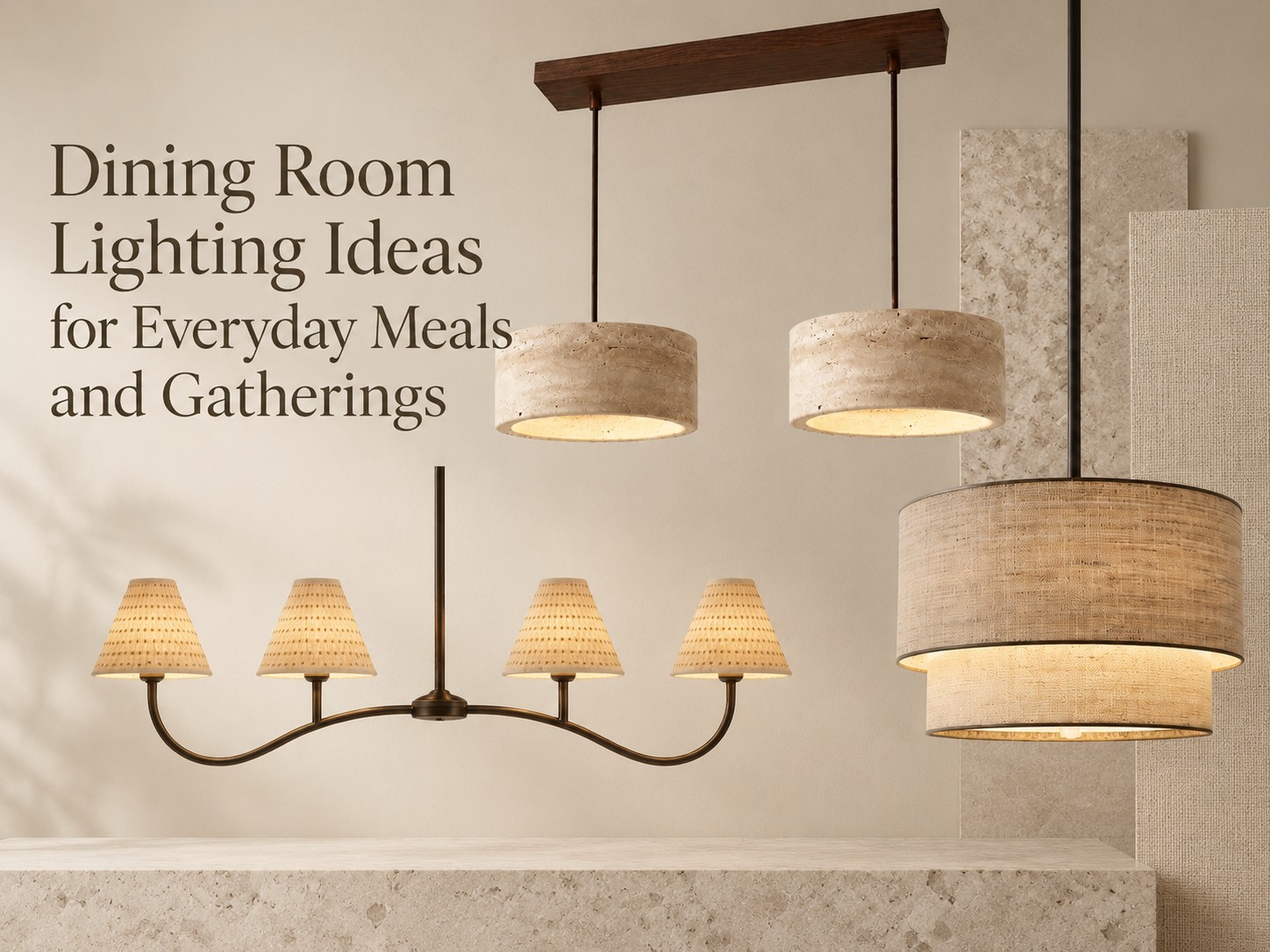
Dining Room Lighting Guide
Dining Room Lighting Ideas for Everyday Meals and Gatherings
The dining room hosts quick breakfasts as well as long conversations. The most useful lighting lets you see the meal, see one another, and change the mood without leaving the room dark.
Good dining room lighting begins with the table. Its length, shape, and location guide the main fixture; the surrounding room determines what additional light you need. Measure the space before choosing a pendant or chandelier solely from a photo.
Let the Table Guide the Main Fixture
A round table often works well with a centered round pendant or chandelier. A long table may suit a linear fixture or a balanced row of smaller pendants. Keep the fixture visually within the tabletop so it does not crowd diners at the ends. If the table can extend, consider how the light will relate to both its everyday and extended lengths.
Center the fixture over the table rather than assuming that the room center is the same point. If you are moving a junction box, ask a qualified electrician about the appropriate installation method.
Check Hanging Height and Sightlines
About 30 to 36 inches from the tabletop to the fixture’s lowest point is a common starting point for an 8-foot ceiling, but it is not a universal rule. Sit at the table and look across it: you should see the person opposite you without staring into an exposed bulb or large shade.
Measure the full installed height, including any chain or stem. Follow the manufacturer’s instructions and local electrical requirements. A tall centerpiece may also affect the view more than you expect.
Compare a Drum Pendant and a Linear Chandelier
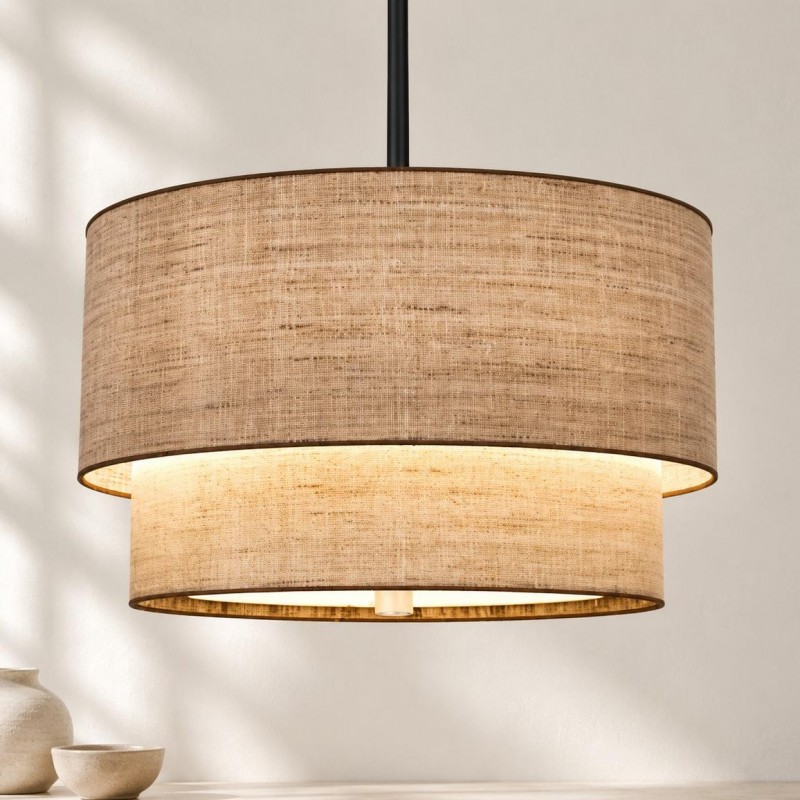
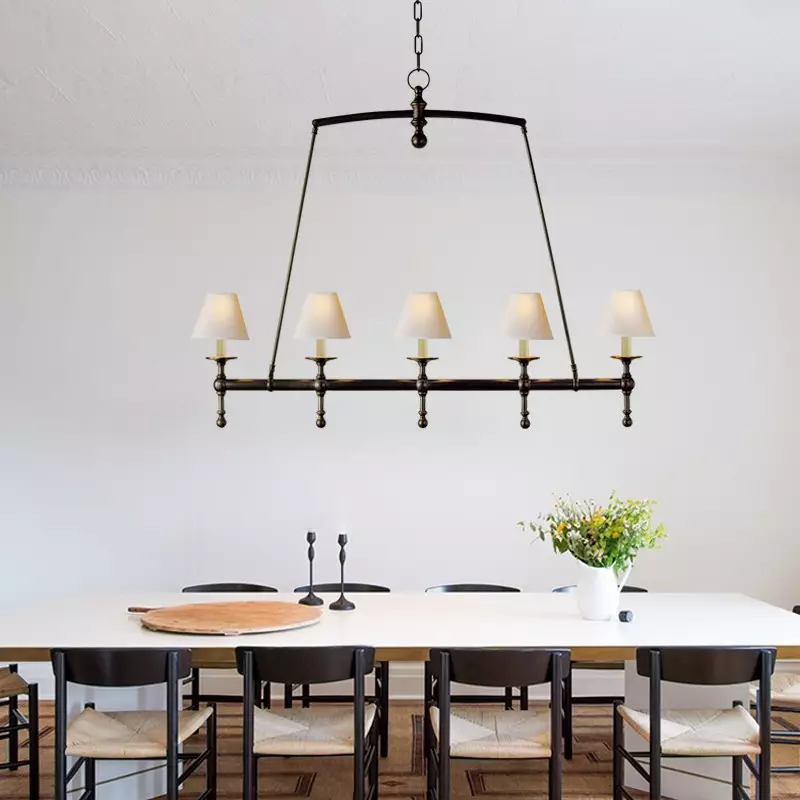
A drum shade can create a visually calm focal point, while a linear chandelier follows the direction of a rectangular table. The material and bulb arrangement influence the light as much as the outline does. Compare these examples, then check dimensions and bulb specifications on each product page.
Add a Second Layer for the Room
The central fixture lights the dining surface, but a sideboard or corner may remain dim. A wall light or table lamp on a buffet can bring depth to the room without making the table light uncomfortably bright. Avoid a strong beam directly behind a seated guest’s head.
If you want dimming, verify that the selected fixture, bulbs, and dimmer are compatible. Use the brighter setting for serving and cleanup and a softer setting when dining.
Avoid Common Dining-Light Mistakes
- Choosing by room size only: check the table shape and width too.
- Hanging too low: test seated sightlines before final installation.
- Relying on one harsh bulb: consider diffusion and supporting light.
- Ignoring table movement: check how the fixture looks if the table extends or shifts.
Frequently Asked Questions
Should a dining light be centered over the table?
Usually yes. The table, not necessarily the center of the room, is the main reference point.
Can I use two pendants over a dining table?
Yes, especially over a longer table. Check their combined width, spacing, and view across the table before installing.
How high should a dining pendant hang?
A common starting point is about 30 to 36 inches above the tabletop with an 8-foot ceiling; refine it for fixture size, ceiling height, and seated views.
