

Bedroom Lighting Guide
Bedside Lighting Ideas: Table Lamps or Wall Sconces?
Bedside lighting has a simple job: give you enough light to read or move around without making the entire bedroom feel alert and bright.
The choice between a bedside table lamp and a wall sconce is not just about style. Think about how you use the bed, where your head rests, how much nightstand space you need, and whether you can reach the switch comfortably.
List Your Bedside Tasks
Do you read paper books, look after a child at night, or only need a gentle light before sleep? A directed shade can help with reading, while a softly diffused lamp may feel more relaxing for general bedside use. If two people share a bed, separate lights let each person control their side.
Also check how the light appears from a reclining position. A bare bulb that looks fine when standing can be uncomfortably bright when your eye is level with the pillow.
When a Table Lamp Makes Sense
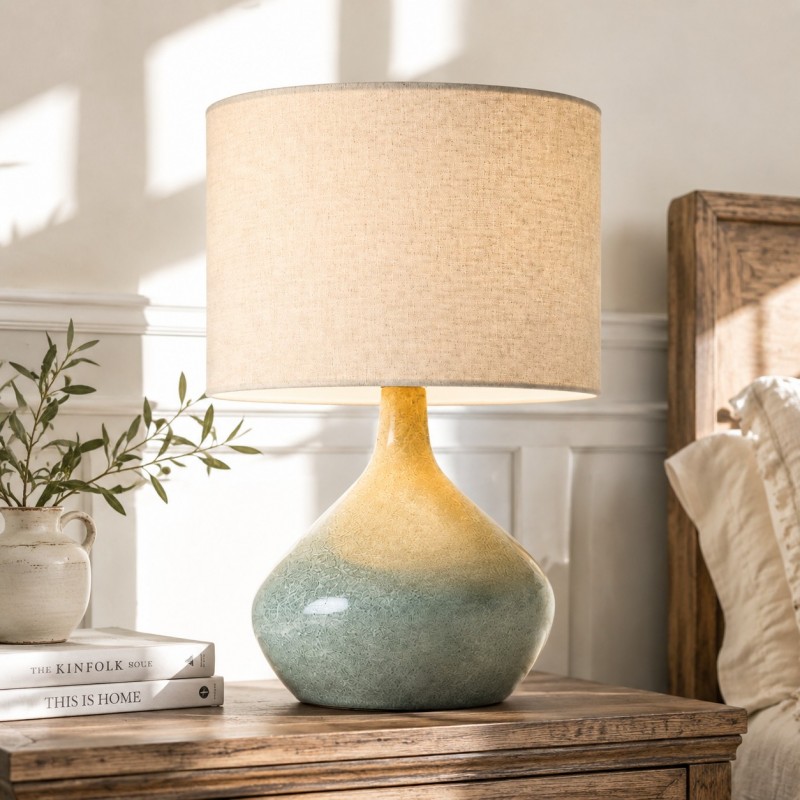
A table lamp is simple to reposition and does not require a new wall junction box. Measure the nightstand surface and leave room for a phone, book, and glass of water. The shade should direct useful light toward the page without extending awkwardly into the sleeping area.
Look through table lamps for shapes that fit the nightstand. Before purchasing, check the base footprint, switch location, cord route, and compatible bulb.
When a Wall Sconce Works Better
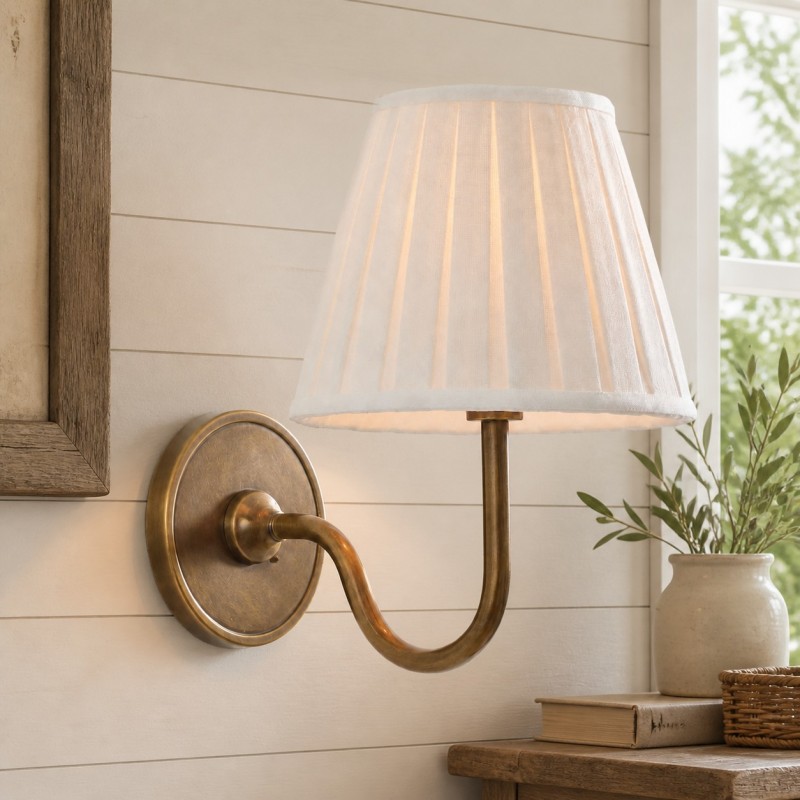
A wall-mounted sconce frees the tabletop, which is helpful beside a narrow bed or small nightstand. Mark its proposed position with painter’s tape and test it while sitting upright and lying down. Align it with your reading position rather than relying on a universal measurement from the floor.
For a hardwired fixture, plan the junction box and switching with a qualified electrician. A plug-in sconce needs a suitable outlet and a tidy, safe cord path.
Balance Both Sides of the Bed
Matching fixtures can look orderly, but they are not required. If one person reads and the other does not, different task lighting can still look coordinated through a shared finish or shade material. Make sure each side has independent control when possible.
Keep some ambient bedroom light available for getting dressed and moving around. Bedside lights work best as one layer, not the only light in the room.
Bedside Lighting Mistakes to Avoid
- Hard-to-reach switches: test access from bed.
- Oversized lamp bases: preserve practical nightstand space.
- Visible glare from pillows: assess the shade from a reclining position.
- Poor cord routing: keep cords away from walking paths and moving furniture.
Frequently Asked Questions
Are sconces better than table lamps beside a bed?
They save tabletop space, but table lamps are easier to move. Choose based on your layout, installation options, and reading needs.
How high should a bedside sconce be?
There is no single height for every bed. Test the fixture relative to the mattress, headboard, and your eye position while reading.
Can bedside lights be different on each side?
Yes. Keep a shared visual element if you want a cohesive look, but prioritize comfortable light and control for each person.
