

Living Room Lighting Guide
Living Room Lighting Ideas: Layer Light for Every Activity
A living room has more than one job. Plan separate layers of light so you can change the space from bright and practical to calm and comfortable.
Useful living room lighting is flexible. A ceiling fixture can help you move around, a lamp can illuminate a book, and a wall light can bring a dark corner into balance. Together they often feel more comfortable than one bright central source.
Map the Activities First
Walk through the room and note where people read, talk, watch television, play games, or pass through. A sofa beside a window may need little daytime light but a lamp after sunset. A corner chair may need its own focused source even if the ceiling light is nearby.
Check the room at night, when shadows are easiest to see. Mark the places that feel too dark and the spots where exposed bulbs reflect in the television.
Build an Even Ambient Layer
Ceiling lights, indirect wall light, or several lamps can establish general brightness. Avoid putting all of the output in one small, glaring fixture. If your room opens into a dining or kitchen area, aim for a comfortable transition between spaces rather than a bright island surrounded by darkness.
Choose compatible bulbs so the different fixtures do not produce noticeably mismatched whites. Dimming can be helpful when supported by the fixture, bulb, and control.
Put Task Light Where You Sit
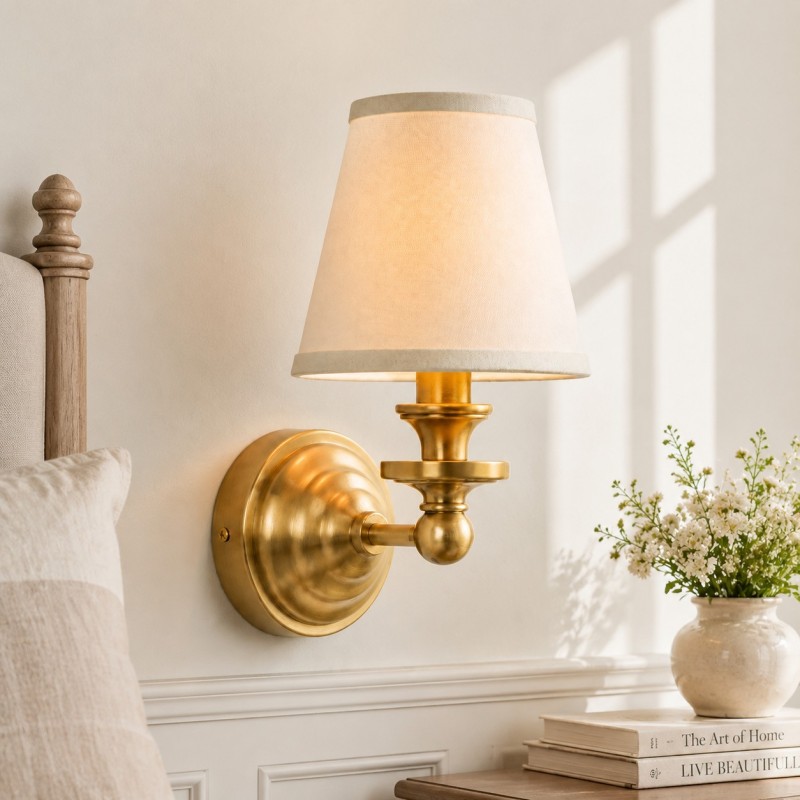
A table lamp beside a chair can light the page without flooding the television area. A wall light may suit a narrow side table or a sofa against the wall. Choose the shade position with seated eye level in mind.
Two lamps do not need to be identical. Coordinate one finish, material, or silhouette while letting each location do a different job.

Use Accent Light with Restraint
Accent light can reveal artwork, shelving, or the texture of a wall. It should complement the room rather than create multiple competing bright points. Check how the light falls on the feature from your usual seats, not only when standing close to it.
For television viewing, a softer background often feels more comfortable than watching a bright screen in a completely dark room. Keep lamps out of direct reflection on the screen.
Avoid a Flat or Glaring Room
- Only one ceiling light: add task light near seating.
- Exposed bulbs at eye level: check from the sofa.
- Every light on one switch: separate controls add flexibility.
- Neglecting circulation: keep paths and steps visible.
Frequently Asked Questions
How many lamps should a living room have?
There is no fixed number. Start with each seating task and any dark circulation areas, then add only the sources those locations need.
Should living room lights match?
No. Repeating a finish, shade material, or general shape can create cohesion without using identical fixtures.
Where should lamps go for television viewing?
Keep them outside the screen’s direct reflections and use enough soft background light for a comfortable contrast.
