

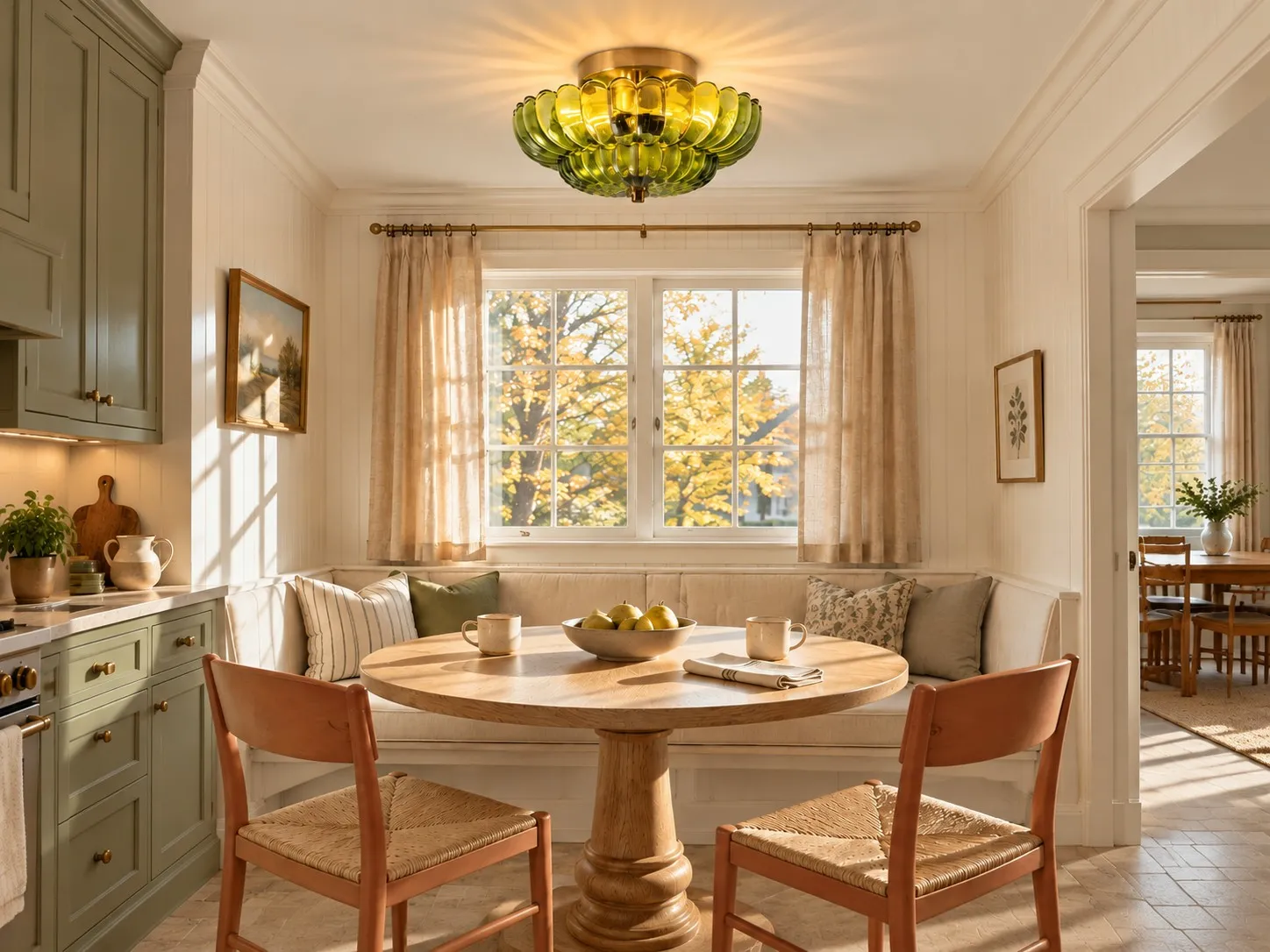
Small-Space Lighting Guide
Lighting for Low Ceilings: Bright Ideas Without the Bulk
Limited headroom does not mean settling for flat, uninspired light. The key is to select the right fixture depth and add light where the ceiling fixture cannot do everything.
When planning lighting for low ceilings, start by measuring the floor-to-ceiling height and the height of anyone moving through the room. Record the door swing, cabinet clearance, and the lowest point of the fixture, not just its shade height.
Know Your Low-Profile Options
A flush mount sits close to the ceiling and is often the simplest starting point for hallways, bedrooms, and compact living spaces. A semi-flush mount hangs slightly lower, which can add dimension and spread light around the shade. It needs more headroom, so compare each model’s installed height.
A shallow pendant may work over a fixed surface such as a dining table where people will not walk directly underneath, but check the full drop and local clearances. Browse ceiling lights before choosing by appearance alone.
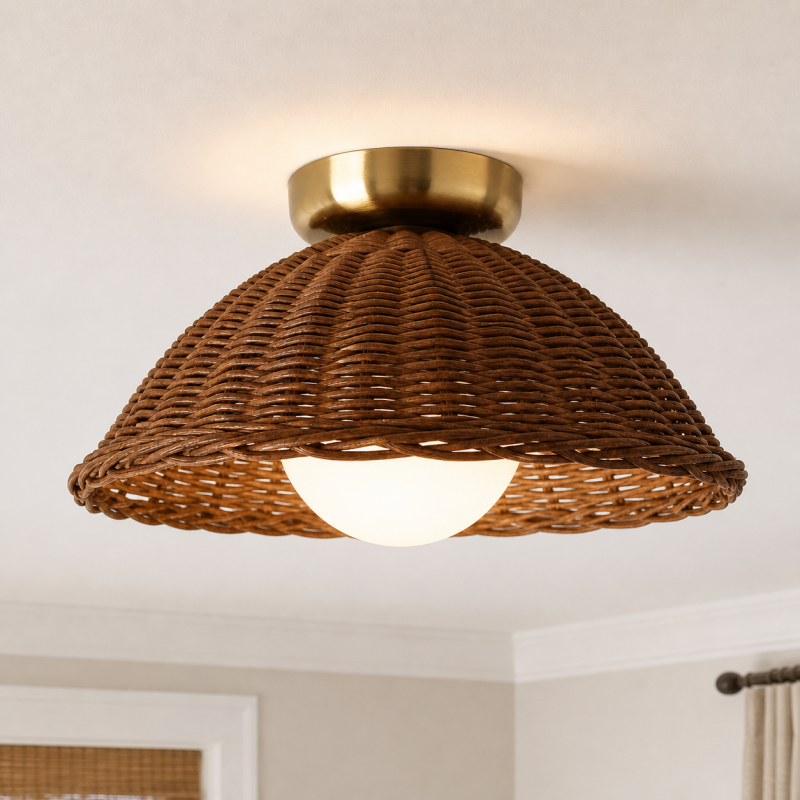
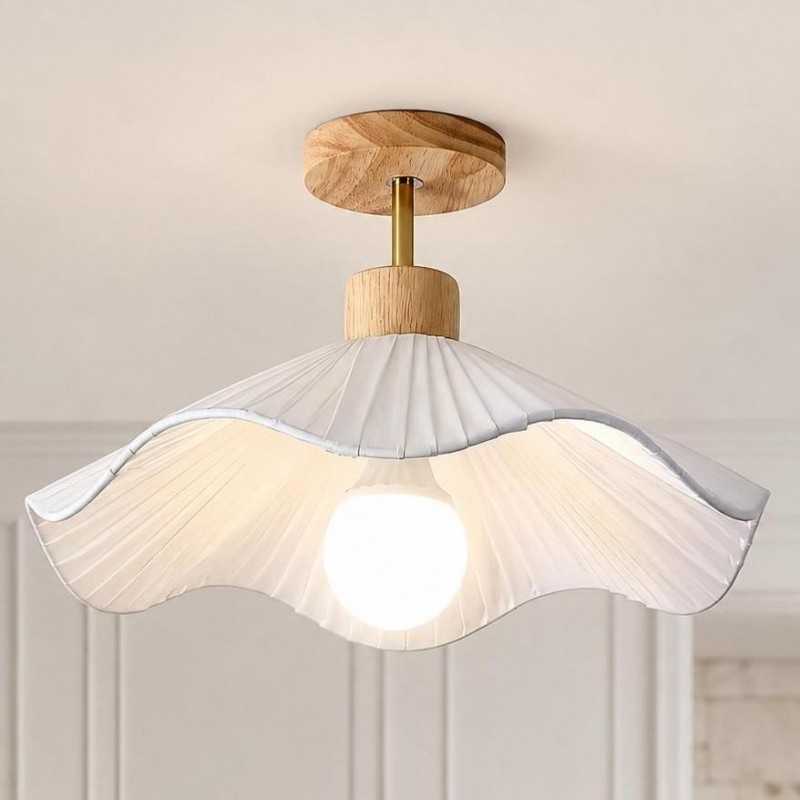
Measure Clearance Before You Buy
Read the fixture dimensions for overall height, canopy, and any fixed stem. Mark the bottom of a proposed fixture with painter’s tape on a wall at the intended height. In circulation areas, protect adequate headroom and follow local code and manufacturer instructions.
Low-profile does not always mean small in diameter. A broader fixture can give a room presence without hanging far below the ceiling, as long as it fits the room’s proportions.
Add Light Beyond the Ceiling
One central light often leaves corners, desks, and seating areas in shadow. A wall sconce, floor lamp, or table lamp can put useful light near a task without using more ceiling height. In a narrow hallway, several appropriately spaced ceiling fixtures can feel more even than one oversized light.
Choose shades and bulb placement with glare in mind, especially when the fixture is close to eye level from a staircase or loft.
Choose by Room
Hallway: prioritize door clearance and an even walking path. Bedroom: add bedside light so the ceiling fixture can remain soft. Living room: use accent and reading lamps to complement the overhead light. Dining area: if using a hanging fixture, keep it over the table and verify sightlines.
Avoid These Low-Ceiling Mistakes
- Checking diameter but not depth: installed height determines headroom.
- Using one fixture for every task: layer light near seats and work areas.
- Hanging a pendant in a walking path: test its lowest point first.
- Choosing an exposed bulb at eye level: check glare from normal viewpoints.
Frequently Asked Questions
What light fixture works best for a low ceiling?
A flush mount is a practical starting point. A compact semi-flush fixture can also work when its installed height leaves sufficient clearance.
Can I use a chandelier with a low ceiling?
Sometimes over a fixed table, but verify the fixture’s minimum drop, sightlines, and required clearance. Avoid placing a hanging fixture where people walk beneath it.
How can I make a low room feel brighter?
Combine even ambient ceiling light with task lighting and wall or table lamps where the room needs them.
