


Wall Lighting Guide
Wall Sconce Placement Guide: Height, Spacing, and Glare
A sconce can look perfectly placed on a blank wall and feel wrong when you sit down or open a door. Its best height depends on the people, furniture, and fixture in the actual room.
There is no universal wall sconce height that works everywhere. A bedside reading light, a hallway accent, and a light beside a mirror each have a different job. Start with that job, then test the fixture’s position at normal eye level.
Measure the Fixture Before Marking the Wall
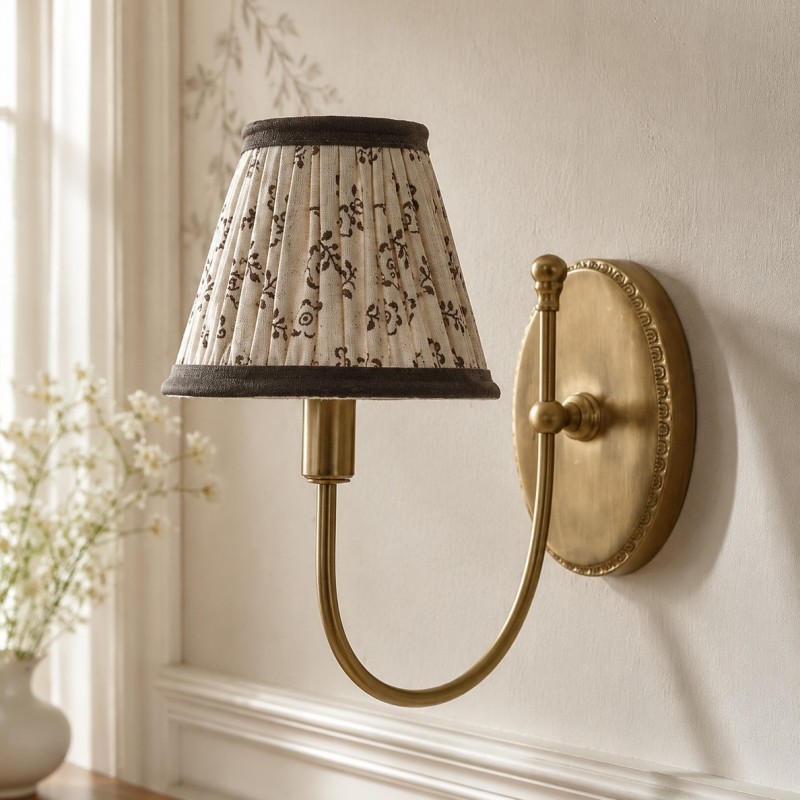
Record total fixture height, width, and projection from the wall. Identify the bulb position and the direction of the shade opening. A centered mounting plate does not always put the light source at the same height as the center of the visible fixture.
Use painter’s tape to mark the top, bottom, and outer edge at the proposed location. This reveals interference with door trim, cabinet doors, artwork, or a narrow walkway before an electrical box is moved.
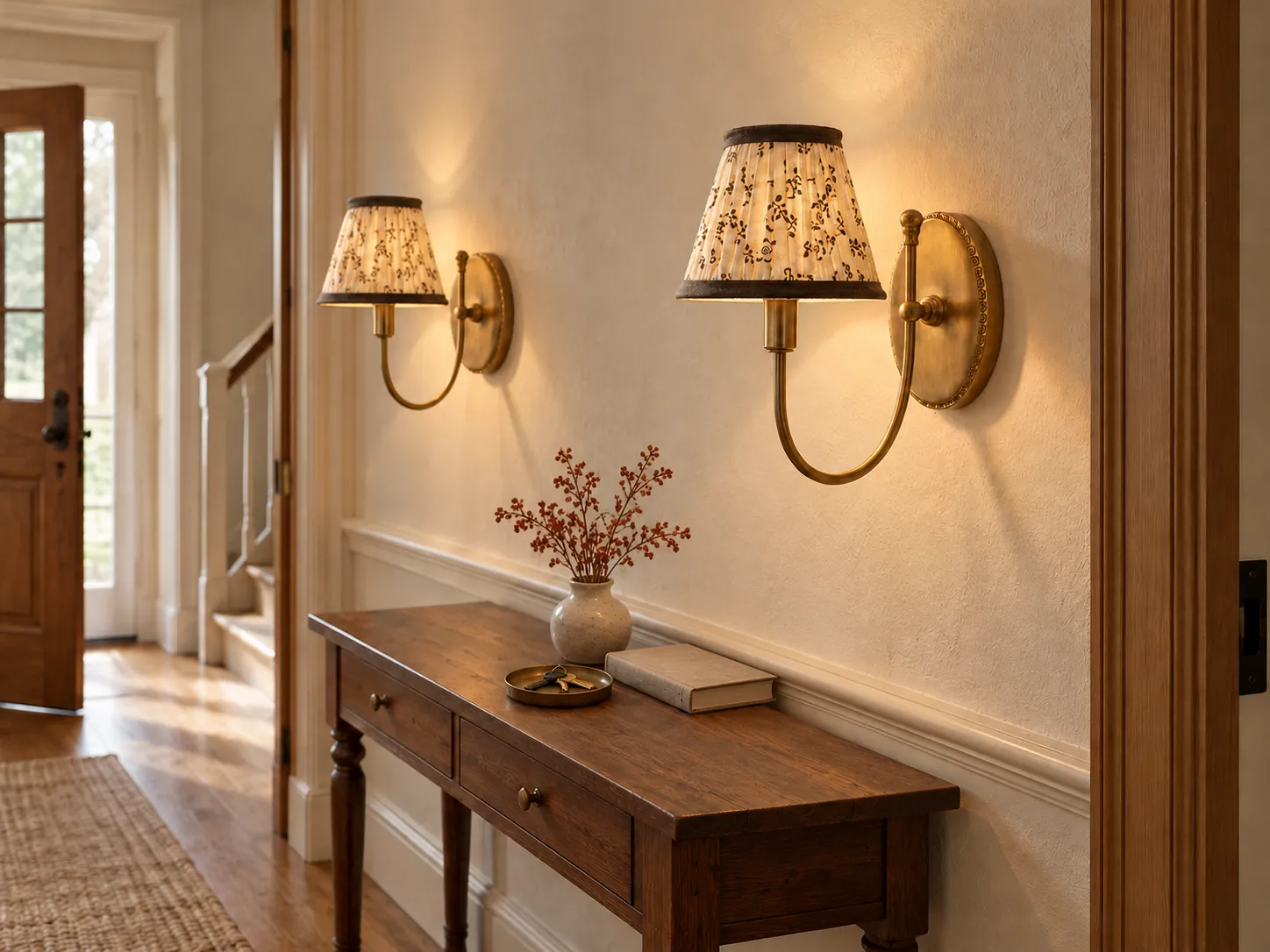
Hallway Sconces: Protect the Walking Path
In a hallway, install the light where people can pass comfortably and where the shade does not collide with an opening door. Compare how the fixture looks from each approach and whether an exposed bulb shines into someone’s eyes.
Long hallways often need more than one light. Rather than relying on a fixed spacing formula, consider the actual light distribution, door positions, and dark gaps between sources.
Bedside and Mirror Placement Need Different Tests
For a bedside sconce, sit against the headboard with a book. Position the light to reach the page and keep the switch within comfortable reach. For mirror lighting, view your face from the normal standing position; side lights should illuminate it evenly rather than creating glare in the mirror.
Near a bathroom mirror, verify the fixture’s suitability for its exact location and local electrical requirements. Product names alone do not establish a damp- or wet-location rating.

How to Align a Pair of Sconces
Use the furniture or architectural feature between them as the reference: a bed, mirror, console, or doorway. Check equal visual distance from the central feature and compare where the light actually falls. Matching the mounting-box height is not enough if one fixture sits next to a taller piece of furniture.
Before final installation, stand and sit in the usual viewing positions. Ask a qualified electrician to confirm box placement, wiring, and code requirements.
Common Placement Mistakes
- Following one height for every room: test the activity and eye level.
- Ignoring wall projection: confirm door and walking clearances.
- Mounting before testing the shade: bulb position may change glare.
- Assuming symmetry solves function: check where each light actually lands.
Frequently Asked Questions
What is the standard height for a wall sconce?
Guidelines vary by room and fixture. Mark the actual fixture on the wall and check eye level, light direction, and surrounding furniture.
How far apart should two sconces be?
Use the bed, mirror, or other feature between them as a starting point, then assess light distribution and visual balance in the real space.
Can I put a wall sconce beside a bathroom mirror?
Yes when the fixture is suitable for the exact bathroom location and the installation complies with local requirements.
